Purple Sweetpotatoes

Learn about the health benefits, versitility purple sweetpotatoes, as well as where to buy them and how to cook them.

Purple sweetpotatoes bring together eye-catching colour, gentle sweetness and exceptional natural nutrition, making them a great choice for anyone who already loves sweetpotatoes and wants to try something new.

Their rich purple flesh comes from natural plant pigments called anthocyanins, which are being actively studied for their potential health benefits, and they work just as well in everyday cooking as the orange varieties you already know.

Whether you are searching for “purple sweetpotato recipes”, want to understand the health benefits of this variety or are simply wondering “where to buy purple sweetpotato in the UK”, this page will take you through what makes purple sweetpotatoes special and how to enjoy them at home.

Purple sweetpotato recipes

From oven-baked to air-fried, there are so many ways to enjoy purple sweetpotatoes. Once you have found a good supply of purple sweetpotato in the UK, the next step is deciding how to cook it. Browse our purple sweetpotato recipes below.


Where to buy purple sweetpotatoes

Purple sweetpotato is still a little harder to find in the UK than the familiar orange variety, but it is becoming more widely available. You may see it described simply as “purple sweetpotato” or under variety names on loose produce labels and online listings.

Co op currentlty has a limited edition range of purple sweetpotatoes online and in selected stores. Click below to find out more about their limited edition range.

Health benefits of purple sweetpotatoes

The deep purple colour in these sweetpotatoes comes from anthocyanins, a family of antioxidants that has been studied for a wide range of potential health benefits. Research into anthocyanins isolated from purple sweetpotatoes suggests they can help protect cells from oxidative stress and may play a role in supporting heart health, metabolic health and general cellular defences when enjoyed as part of a varied diet. 


A source of steady energy

Like other sweetpotatoes, purple varieties are a source of complex carbohydrates and fibre, which together provide a slower, steadier release of energy than many more refined carbohydrate foods. One cup of cooked purple sweetpotato, which is close to two small to medium baked tubers, provides around 210 calories, with most of this coming from carbohydrates and around five grams of fibre, which slows digestion and helps keep you feeling satisfied for longer. This makes purple sweetpotatoes a good fit for meals where you want energy that lasts, for example, before a busy afternoon or after exercise, when paired with a source of protein and healthy fats.

Support for eye health

Anthocyanins from purple sweetpotatoes are being explored for their potential to help protect the delicate cells at the back of the eye. Laboratory work on retinal pigment epithelial cells has shown that extracts from purple sweetpotatoes can help these cells survive and continue to divide under stress conditions, which suggests a possible protective role for vision over time. Alongside these unique pigments, purple sweetpotatoes also contribute vitamin C, which supports normal collagen formation in blood vessels that serve the eye.

Support for digestive health

Fibre is one of the quiet strengths of purple sweetpotatoes. A 200-gram cooked portion offers roughly five to six grams of fibre, with both soluble and insoluble types present. Soluble fibre holds on to water and forms a soft gel, which can make stools easier to pass and may help with regularity in people prone to constipation. Insoluble fibre adds bulk and helps food move through the digestive system more efficiently, which supports overall gut comfort and function. Because purple sweetpotatoes are also a source of natural plant compounds, they can help feed a diverse community of bacteria in the large intestine, which is increasingly recognised as important for long-term digestive and immune health.

Heart-friendly nutrients

Purple sweetpotatoes fit easily into a heart-conscious way of eating. They are naturally very low in fat and provide potassium, which helps support normal blood pressure when eaten as part of a diet that is also mindful of salt intake. Anthocyanins from purple sweetpotatoes have been examined in several experimental models where they appear to help reduce oxidative stress and support healthy blood vessels, both of which are relevant to cardiovascular health across the lifespan. When you swap more refined carbohydrate sides for a baked or roasted purple sweetpotato, you add fibre, potassium and a wide mix of phytonutrients to the meal without adding saturated fat.

A colourful option for everyday balance

People often ask whether a purple sweetpotato is healthier than the familiar orange kind. In practice, they sit alongside orange sweetpotatoes as a nutrient-dense carbohydrate source, but purple varieties bring a distinctive anthocyanin profile that broadens the range of plant compounds in your diet. Public health advice encourages us to “eat the rainbow” because different colours tend to signal different beneficial compounds in plants, and purple sweetpotatoes are a simple, satisfying way to bring more purple and blue pigments onto the plate. They can be baked, mashed, roasted or turned into salads and bowls, so they slot into many of the same dishes as regular sweetpotatoes while adding extra colour and interest.

Purple sweetpotato nutrition

The table below shows the nutritional information for one medium sized sweetpotato 250 g, compared to an adult’s recommended daily intake.

10%

  • Calories — 280kcal 14% 14%
  • Fat — 0.5g 0% 0%
  • Carbohydrates — 61g 23% 23%
  • Fibre — 7g 23% 23%
  • Protein — 4.6g 9% 9%
  • Vitamin A — 362.5 µg 45% 45%
  • Vitamin C — 33.8 mg 42% 42%
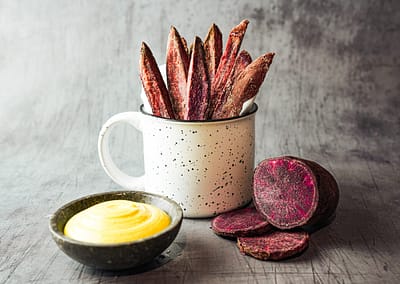
Purple Sweetpotato Fries

Purple sweetpotato varieties

North Carolina is the leading sweetpotato-producing state in the US, and that includes distinctive purple varieties.

Purple Majesty

Purple Majesty is known for its deep purple flesh and skin. It has a smooth texture when cooked and a pleasantly balanced flavour. It holds its colour well during cooking, making it a favourite for roasting, mashing and adding dramatic colour to plates.

Purple Splendor

Purple Splendor is another standout grown in North Carolina. With vibrant purple flesh and a slightly moist texture, it’s excellent baked whole or cubed and roasted. Its flavour is gently sweet with subtle earthy notes.

Other Purple Varieties

You may also come across varieties such as Stokes Purple or Okinawan-type sweetpotatoes. While these are grown in other regions, North Carolina’s Purple Majesty and Purple Splendor are leading the way in quality and consistency.