




The Best Ways to Cook Sweetpotatoes: North Carolina Farmers Share Their Top Choice
Sweetpotatoes are one of the most special ingredients you can keep in the kitchen. Their vibrant orange colour makes every plate pop, and they are loaded with nutrients like fibre, vitamin A, and antioxidants. They also store well for months when kept properly, which makes them a reliable staple not just for autumn but for year‑round cooking.
But with all the possible cooking methods, from boiling and steaming to roasting and frying, many people wonder: what is the best way to cook sweetpotatoes? To find out, we turned straight to the experts who grow them.
Seven North Carolina sweetpotato farmers were asked their favourite way to prepare sweetpotatoes at home. These are people who spend their days in the fields cultivating harvests, and their kitchens reflect generations of tradition and everyday practicality. Their answers were united by a single theme. The very best way to cook sweetpotatoes is by baking them.
Each farmer, however, has their own twist. Here’s what they had to say in their own words, along with ideas on how you can try their methods in your own kitchen.
Why Baking Works So Well
Before diving into the farmers’ advice, it is worth noting why baking stood out unanimously. Heat transforms the sweetpotato as starches break down into sugars, giving it distinctive richness and natural caramel flavour. Baking also retains most of the vitamins and fibre while producing fluffy flesh and crispy edges if you roast at higher temperatures.
This balance of flavour, nutrition, and texture is what sets baked sweetpotatoes apart from other cooking methods, and why every farmer named it their top choice.
Farmers’ Favourite Ways to Bake Sweetpotatoes
Jim Jones, Jones Family Farms
I bake my sweet potatoes at 400°F for about 40 minutes, let them cool, peel, and slice into rounds. Then, I fry them in hot bacon grease until the sweet potatoes begin to caramelise, remove from the heat, and enjoy. So simple, but so delicious.
Jennifer Daniels, H & D Farms
Jennifer proves how straightforward sweetpotatoes can be. By dicing and roasting at high heat, you get crisp edges and tender centres. Roasted cubes are perfect for busy weeknights, and they also make excellent toppers for hearty salads or bowls.
Jacy Barnes Clapp, Barnes Farming & Farm Pak
Jacy values dishes that are versatile and adaptable. She suggests roasting at high heat so the cubes crisp up, then folding them into balanced meals like grain bowls or fresh salads. It is an efficient way to take baked sweetpotatoes from side dish to main‑course ingredient. Recipes like the Sweetpotato, Chickpea and Spinach Lunch Box highlight how her approach sets the stage for satisfying, fuss‑free meals.
Robin Narron, Nash Produce
I love these because they are savoury, not sweet. They have a bit of heat from red chilli flakes that make this dish a must‑try.
Robin’s words remind us that sweetpotatoes do not always have to lean into their natural sweetness. A savoury approach with chilli flakes gives wedges a warming, lightly spiced character. This variation offers a flavourful alternative to chips or fries, especially when served with grilled meat or poultry. To try a similar variation, explore Grilled Sweetpotato Wedges with Chicken Skewers for a delicious pairing.
Dae Wood, JR Wood Farms
Dae’s method is fast, consistent, and perfect for family meals. In just 20 minutes, you get cubes that are crispy on the outside and fluffy inside. Garlic and seasoning provide a welcome flavour, and the base can be customised with fresh herbs, sauces, or extra spices.
Amy Hill, Tull Hill Farms
Amy highlights a family recipe that has been passed down for generations. Baked candied sweetpotatoes bring comforting sweetness enhanced by sugar, butter, lemon, and cinnamon sticks. More than a dish, it represents memory, heritage, and the warmth of family traditions.
Dae’s method is fast, consistent, and perfect for family meals. In just 20 minutes, you get cubes that are crispy on the outside and fluffy inside. Garlic and seasoning provide a welcome flavour, and the base can be customised with fresh herbs, sauces, or extra spices.
Other Ways to Cook Sweetpotatoes
Although baking was the unanimous favourite among farmers, other cooking methods are worth keeping in mind.
Baking is one of the most popular methods of cooking sweetpotatoes and can result in a soft, buttery, and tender sweetpotato that’s perfect as either a side dish or a nutritious main when topped with anything from chilli to chickpeas.
The simplest way to bake a sweetpotato is to:
- Wash and scrub off any dirt, pat them dry and prick all over with a fork.
- Bake in a preheated oven at 180°C for 40 minutes to an hour depending on their size, until they’re easy to pierce with a knife.
Top tip: Lightly brush the sweetpotatoes with your favourite oil and season with sea salt for extra crispy skin!
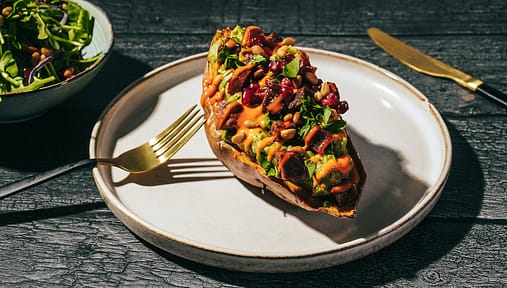
Interested in elevating your baked sweetpotato? Check out this sweetpotato dauphinoise recipe for a twist on a classic French side that’s creamy and comforting, or if you’re looking for a light dinner, try our salsa and guacamole stuffed sweetpotatoes.
Microwaving sweetpotatoes is an ideal cooking method if you’re short on time and want to create a quick, delicious and nutritious meal. You’ll get a similar result to baked sweetpotatoes in a fraction of the time!
Here’s the easiest way:
- Wash and scrub off any dirt, pat them dry and prick all over with a fork.
- Microwave on the highest setting for 8-10 minutes, turning once, until tender and piping hot.

Boiling sweetpotatoes is the go-to method for many delicious recipes that call for tender and sweet flesh that can be transformed into mash for topping pies through to purees to knead into homemade gnocchi. This is how to do it:
- Peel away the skin and cut into evenly sized cubes.
- Place them into a pan and cover with water by a few inches with a pinch of salt.
- Boil the water, reduce to medium and cook for 15-20 minutes or until tender.
- Carefully drain the sweetpotatoes and you’re good to go.

For many people, there’s nothing better than creamy, silky, warming mash that works as a versatile side dish or can be used as the basis for exciting recipes like this sweetpotato au gratin.
By reaching for sweetpotatoes instead of white or Irish potatoes, you’ll have a vitamin packed alternative that will keep you fuller for longer and add a vibrant pop of colour to your plate.
After baking or boiling, here’s what to do:
- Scoop the flesh out of the baked tatties and add to a pan or leave the drained cubes in the pan if boiled.
- Add your favourite dairy or substitute like butter, milk or soya milk, and season well.
- Mash away with a potato masher and serve.
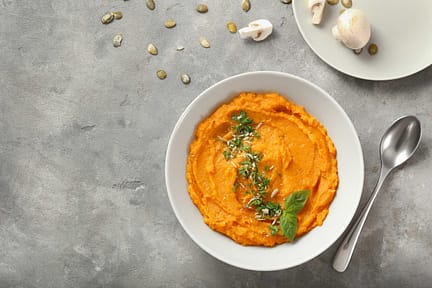
If you’re looking for more inspiration on making the most of mashed sweetpotatoes, why not try our German cottage sweetpotato pie with bacon? It’s a crowd pleasing that’s inexpensive and delivers lots of flavour.
Air fryers are becoming a kitchen essential, praised for yielding similar results to an oven but saving on energy and time. The air fryer is great for producing sweetpotatoes with crispy skins and velvet like flesh, without having to turn the oven on and with minimal oil.
Great as a side, here is how to cook our air fryer Hasselback sweetpotatoes:
- Wash and scrub off any dirt, pat them dry and prick all over with a fork.
- Leaving the skin on, cut them into evenly sized cubes.
- Preheat the air fryer to 180c and toss the cubes in your favourite seasonings while you wait.
- Place them into the air fryer basket and bake for 15 minutes until crispy and tender

Top tip: You can peel sweetpotatoes, but leaving the skin on ensures more nutritional value – add fibre as well as a crispy texture to your favourite recipes.

Baking
Baking is one of the most popular methods of cooking sweetpotatoes and can result in a soft, buttery, and tender sweetpotato that’s perfect as either a side dish or a nutritious main when topped with anything from chilli to chickpeas.
The simplest way to bake a sweetpotato is to:
- Wash and scrub off any dirt, pat them dry and prick all over with a fork.
- Bake in a preheated oven at 180°C for 40 minutes to an hour depending on their size, until they’re easy to pierce with a knife.
Top tip: Lightly brush the sweetpotatoes with your favourite oil and season with sea salt for extra crispy skin!
Interested in elevating your baked sweetpotato? Check out this sweetpotato dauphinoise recipe for a twist on a classic French side that’s creamy and comforting, or if you’re looking for a light dinner, try our salsa and guacamole stuffed sweetpotatoes.
Microwave
Microwaving sweetpotatoes is an ideal cooking method if you’re short on time and want to create a quick, delicious and nutritious meal. You’ll get a similar result to baked sweetpotatoes in a fraction of the time!
Here’s the easiest way:
- Wash and scrub off any dirt, pat them dry and prick all over with a fork.
- Microwave on the highest setting for 8-10 minutes, turning once, until tender and piping hot.


Boiling
Boiling sweetpotatoes is the go-to method for many delicious recipes that call for tender and sweet flesh that can be transformed into mash for topping pies through to purees to knead into homemade gnocchi. This is how to do it:
- Peel away the skin and cut into evenly sized cubes.
- Place them into a pan and cover with water by a few inches with a pinch of salt.
- Boil the water, reduce to medium and cook for 15-20 minutes or until tender.
- Carefully drain the sweetpotatoes and you’re good to go.

Mashing
For many people, there’s nothing better than creamy, silky, warming mash that works as a versatile side dish or can be used as the basis for exciting recipes like this sweetpotato au gratin.
By reaching for sweetpotatoes instead of white or Irish potatoes, you’ll have a vitamin packed alternative that will keep you fuller for longer and add a vibrant pop of colour to your plate.
After baking or boiling, here’s what to do:
- Scoop the flesh out of the baked tatties and add to a pan or leave the drained cubes in the pan if boiled.
- Add your favourite dairy or substitute like butter, milk or soya milk, and season well.
- Mash away with a potato masher and serve.
If you’re looking for more inspiration on making the most of mashed sweetpotatoes, why not try our German cottage sweetpotato pie with bacon? It’s a crowd pleasing that’s inexpensive and delivers lots of flavour.
Air Fryer
Air fryers are becoming a kitchen essential, praised for yielding similar results to an oven but saving on energy and time. The air fryer is great for producing sweetpotatoes with crispy skins and velvet like flesh, without having to turn the oven on and with minimal oil.
Great as a side, here is how to cook our air fryer Hasselback sweetpotatoes:
- Wash and scrub off any dirt, pat them dry and prick all over with a fork.
- Leaving the skin on, cut them into evenly sized cubes.
- Preheat the air fryer to 180c and toss the cubes in your favourite seasonings while you wait.
- Place them into the air fryer basket and bake for 15 minutes until crispy and tender
Top tip: You can peel sweetpotatoes, but leaving the skin on ensures more nutritional value – add fibre as well as a crispy texture to your favourite recipes.
Flavour Ideas for Cooked Sweetpotatoes
Because sweetpotatoes are naturally sweet, they adapt beautifully to a wide range of flavour styles. Baking provides the ideal canvas.
- Savoury additions like thyme, rosemary, cumin, or paprika deliver depth.
- Sweet toppings such as cinnamon, maple syrup, or nutmeg highlight their sugars.
- Fresh accents like goat cheese, feta, or citrus create contrast.
This flexibility is exactly why sweetpotatoes fit seamlessly into both everyday meals and festive spreads.
Why North Carolina Sweetpotatoes Stand Out
North Carolina is the top producer of sweetpotatoes in the United States. Its sandy soil and warm climate create ideal conditions for growing, while many of the state’s farms have perfected their craft over generations. The result is sweetpotatoes that are consistently vibrant, flavourful, and versatile in cooking.
Because they keep well after harvest, they are also available long after the growing season, making them a dependable staple for healthy cooking throughout the year.
Bringing Farmer Wisdom Into Your Kitchen
The farmers’ insights make one message clear. The best ways to cook sweetpotatoes all come back to the oven. Baking highlights their natural sweetness, preserves nutrients, and provides a base for both savoury dishes and classic family recipes.
You can follow their lead at home. Roast cubes into a lunchbox recipe like the Sweetpotato, Chickpea and Spinach Lunch Box. Spice wedges, as Robin Narron suggests, are similar to Grilled Sweetpotato Wedges with Chicken Skewers. Honour tradition with candied slices, keeping the same spirit that inspired Amy Hill’s family recipe.
Farmer‑Backed Truth: Baking Wins
Every farmer asked returned to the same answer: baking is the best way to cook sweetpotatoes. From quick roasted cubes and wedges to caramelised slices and candied recipes passed down through generations, their methods show how the oven brings out the very best in this versatile vegetable.
When in doubt, bake your sweetpotatoes and then add your personal twist, just as these North Carolina farmers do.